Home › Blog › How to Run a Successful Meet and Greet with a Pet Sitter
How to Run a Successful Meet and Greet with a Pet Sitter
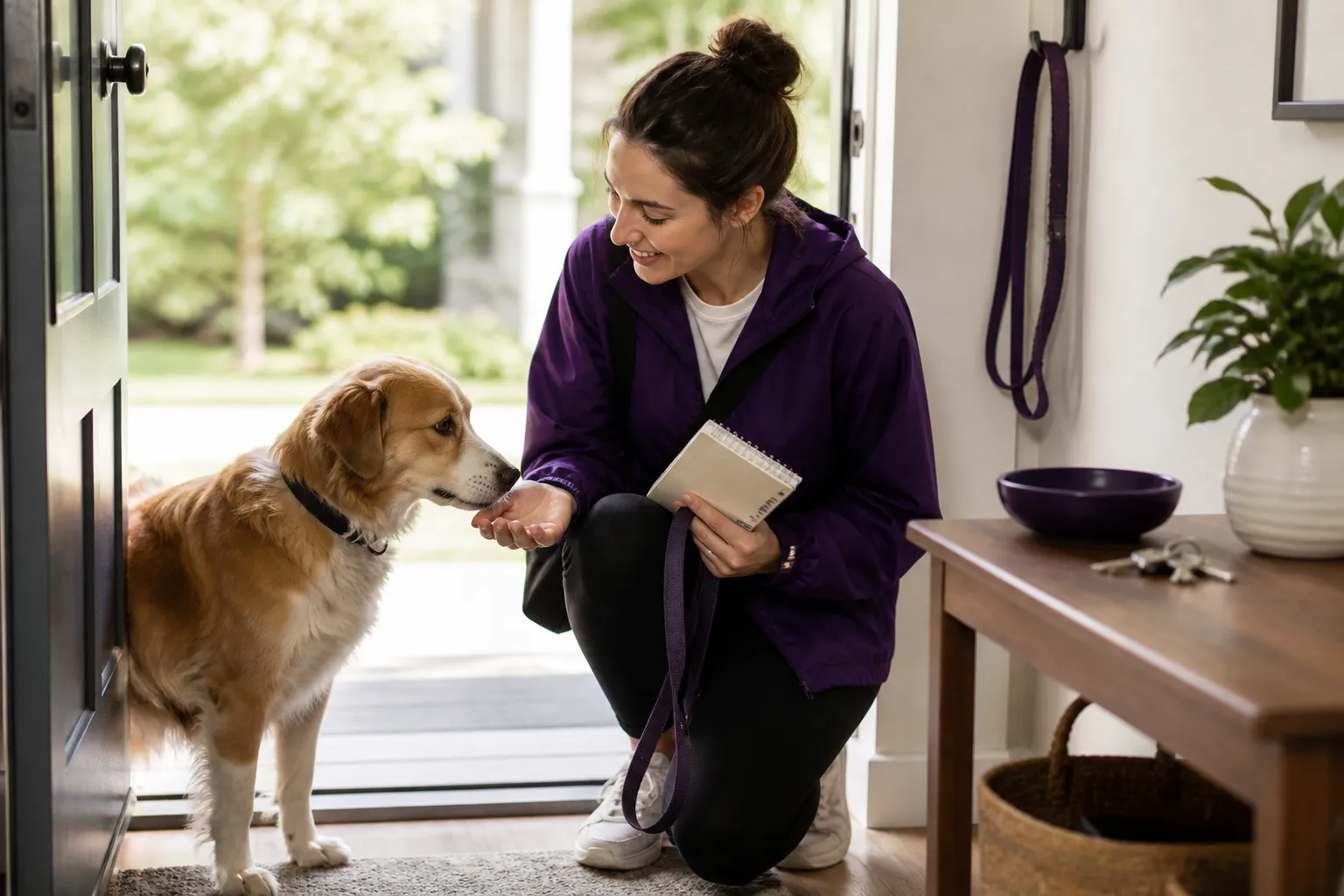
The first meet and greet with a pet sitter sets the tone for every visit that follows. Nail this meeting and you protect your pet’s routine, your home, and your peace of mind.
Use this plan to prep your space and your pet, choose the right person, cover the critical questions, and lock in next steps before anyone leaves.
Prep your pet and your home
Set clear expectations
Decide exactly what you need. Think in time windows and tasks so you can compare sitters on the same plan. Examples:
- Dog: weekday noon walk, 25 to 30 minutes, avoid dog parks, use front-clip harness, no off leash.
- Cat: twice-daily visits, wet food in the morning, dry food at night, scoop litter each visit, play 10 minutes.
- House sitting: overnight stays, bring in mail, water 6 plants, put bins out Tuesday night.
If you are searching for a pet sitter near me or a dog walker near me, write these details out first. It saves time and reduces back-and-forth.
Gather the essentials
- Routine summary: feeding times and amounts, walk length and pace, litter box routine, medications with doses and timing, where supplies live.
- Behavior notes: triggers, bite or scratch history, resource guarding, prey drive, door dashing, anxiety signs, how to greet.
- Health and ID: vet name and phone, vaccination dates, microchip number, current photo, allergies, past injuries.
- Home info: alarm and lock codes, parking details, thermostat range, Wi-Fi only if required for devices already installed, where cameras are located. Always disclose any active cameras.
- Supplies staged: leash, harness, waste bags, crate and bedding, litter and scoop, favorite treats, towels for rainy days, pet-safe cleaner, spare poop bags near the door.
Put this in a one-page handout or a simple shared doc. Label keys clearly and keep lockbox info ready, but only hand over access once you decide to book.
Prepare your pet
- Give a short exercise session earlier in the day so high-energy dogs settle for the meeting.
- Feed a light meal beforehand to avoid food-guarding tension while you talk.
- Leash or crate jumpy dogs at first. Let introductions happen in a controlled way, then give space.
- Set up a quiet room for shy cats. Let the sitter sit at floor level and wait for the cat to approach.
Plan for 30 to 45 minutes. Rushing leads to missed details.
Find the right sitter and set the meeting
Start with a focused search. On SitterListed you can search by service and location, filter by your pet type, and choose your country if you are in Ireland, the United Kingdom, the United States, Canada, Australia, or New Zealand. Review detailed profiles with rates, animals accepted, reviews, badges, and response speed. Then message sitters directly to compare availability and set up your meet and greet. This helps you hire a pet sitter directly without a middle layer.
Shortlist two or three solid options. If you need a house sitter for both pets and your home, favor profiles that list your species and any special skills you need, like administering insulin or handling large breeds. If you need to find cat sitter help, look for litter care details and experience with shy cats.
In your first message, confirm the basics: dates, services, your area, pet type and age, medical needs, and your preferred meeting window. Direct messaging keeps things clear and shows who replies fast.
Directories that help you compare options make this easier in other parts of life too. For example, TutorListed helps people find the right tutor by subject and place and contact them directly, which is the same kind of simple match-and-meet process you want here.
What to cover and test during the visit
Experience and approach
- Tell me about your recent experience with pets like mine. What ages, sizes, and temperaments do you work with most?
- How do you handle pulling on leash, reactivity to dogs, or resource guarding? Which tools do you prefer and why?
- For cats, how do you win over a shy cat and what is your plan if the cat hides the whole visit?
- What is your plan to keep routines consistent when I am away?
Safety and logistics
- If my dog slips a collar or bolts a door, what is your protocol on the spot and who do you call first?
- How do you adjust for heat, cold, ice, or storms on walks? What is your cutoff for unsafe conditions?
- Are there routes you prefer or avoid in my neighborhood and why?
- What is your medication process and how do you document doses?
- Do you carry a spare slip lead, a light, and your phone on walks?
Communication and backup
- How fast do you usually reply to messages before and during a booking?
- What updates do you send after visits, for example photos, notes, time in and out?
- Do you have a backup plan if you are sick or delayed, and how would you loop me in?
- Are you comfortable following a written emergency plan with a vet spending limit?
House rules for house sitting
- Where will you sleep and work while I am away? Any guests?
- How will you handle packages, plants, and trash days?
- What is your approach to home security and locking up on each visit? Walk me through your lockup routine.
Do a quick skills test
- Dogs: take a short trial walk. Watch leash handling, traffic awareness, turns, and how the sitter guides past people or dogs. Look for two points of control if needed, calm body language, and no yanking.
- Cats: ask the sitter to scoop litter and prep food. Watch for clean handling, hand washing, and closing doors and gates as they move around.
- Medication: show the exact routine. Have the sitter demo how they would give a pill or insulin using a treat or a practice syringe cap.
During the visit, watch your pet. Signs of stress include tucked tail, pinned ears, whale eye, crouching, or freezing. Signs of comfort include loose body, soft eyes, normal pacing, and curiosity.
Red flags and green flags
Red flags
- Vague answers about safety or past incidents, or dodging questions about difficult behavior.
- No questions for you about your pet or home. Pros gather details.
- Reluctance to meet at your home before the first visit.
- Overpromising, like guaranteeing your reactive dog will be fine in crowds on day one.
- Poor hygiene around food or litter, or leaving doors and gates ajar during the meeting.
- Cannot describe a basic lockup or lost-dog protocol.
Green flags
- Arrives on time, calm, and friendly, asks smart follow-ups, and takes notes.
- Lets your pet set the pace and reads body language well.
- Repeats back key instructions, confirms doses and times, and suggests labeling meds.
- Offers a short paid trial walk or drop-in before a long booking.
- Shares a clear communication plan with photo updates and quick replies.
- Is comfortable showing ID, references, or pet first aid training if you ask.
If you searched for a dog walker near me and the person seems rushed or distracted, keep looking. You want steady attention for your pet and your home.
Lock in the plan before anyone leaves
- Summarize out loud. Restate dates, number of visits or overnights, walk lengths, feeding details, medication, and house tasks like plants or bins.
- Confirm the rate from the profile and the total estimate based on your plan. If you were given a range, ask for a written number.
- Decide on the update schedule. For example, one photo per visit with a short note on eating, bathroom, and mood.
- Share access only once you are ready to book. Test keys together. Show alarm codes and lockup steps. Write everything down.
- Exchange emergency contacts and vet info. Set a spending limit for vet care if you will be unreachable. Note the nearest 24-hour clinic.
- Schedule a paid trial. A 20-minute walk or one cat visit confirms fit before a longer trip.
- Confirm in writing. Send a short recap message while details are fresh so you both have the same plan on record.
Key takeaways
- Treat the meet and greet like a working session, not a quick hello.
- Prep your notes, your home, and your pet so the sitter can show you how they work.
- Cover safety, routine, communication, and backups, then watch them in action.
- Trust your notes, not your memory. Recap the plan and confirm in writing before you hand over keys.
- Use a directory with detailed profiles and direct messaging so you can compare options and book with confidence.
FAQ
How long should a meet and greet with a pet sitter take?
Plan for 30 to 45 minutes. That gives you time to talk through routines, do a short walk or litter demo, and cover house rules without rushing.
What should I bring to a pet sitter meet and greet?
Have your pet’s routine, behavior notes, vet info, and any meds. Keep keys ready but hand them over only after you confirm the booking.
Should I do a trial visit before a longer booking?
Yes. A single paid walk or drop-in lets you confirm fit, communication, and handling before you commit to overnights or a week of visits.
How do I choose between similar sitters?
Compare response speed, specific experience with pets like yours, and how they handle safety questions. Pick the person whose plan matches your routine.
Is a meet and greet necessary for cats?
It helps. Even independent cats need a clear plan for litter, feeding, and hiding spots, and you can see how the sitter approaches a shy cat.