Home › Blog › Pet Care Checklist for Sitters: Routines, Notes, Contacts
Pet Care Checklist for Sitters: Routines, Notes, Contacts
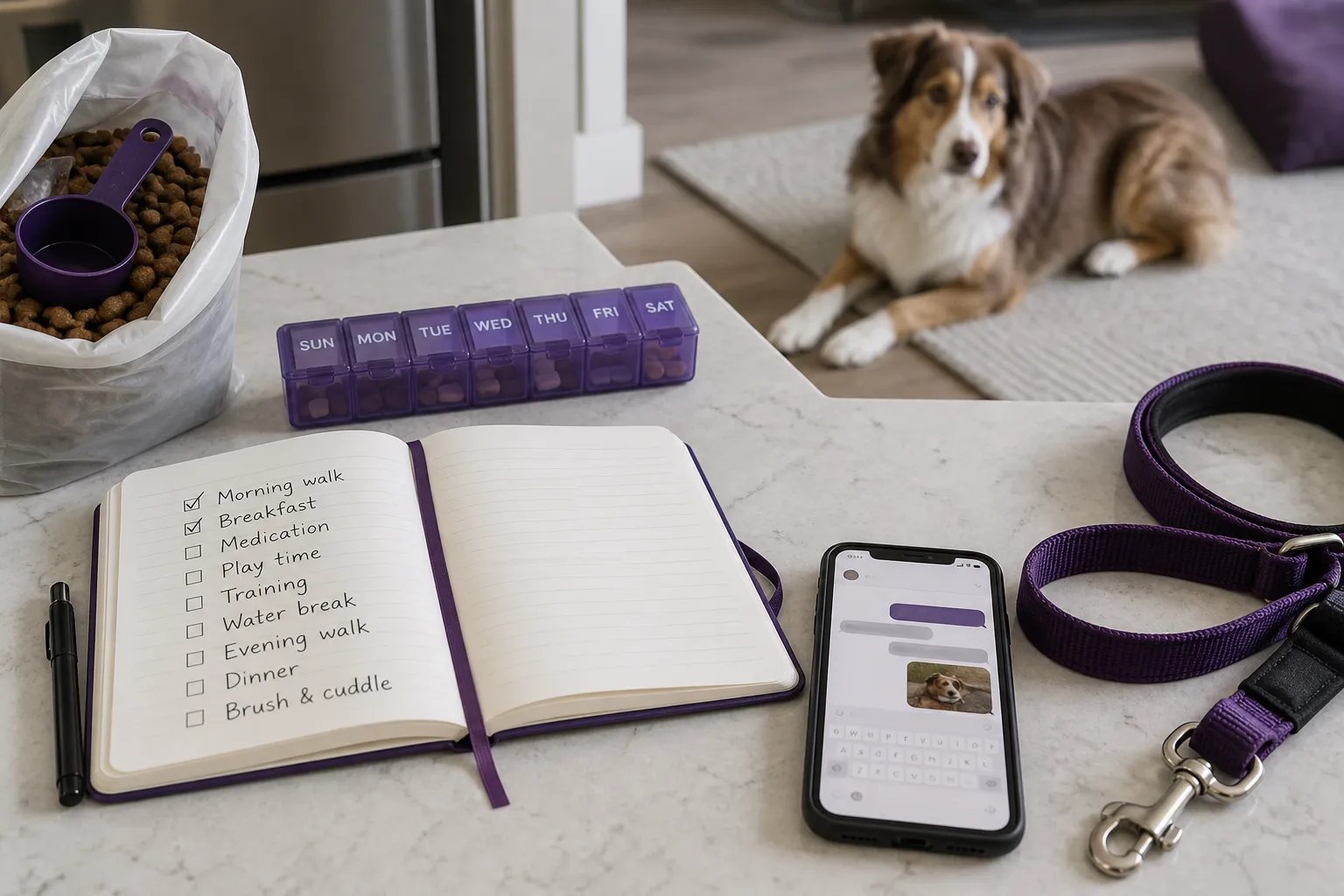
The first 24 hours of a sit make or break the whole booking. Give your sitter everything they need in one place so day one runs like a normal day for your pet. Use this checklist to spell out routines, meds, house rules, and who to call if something goes wrong. It works whether you searched for a pet sitter near me, a dog walker near me, or a trusted house sitter for overnights.
Plan your handover in SitterListed
Shortlist local profiles on SitterListed by service and location, then compare the details that matter: rates, animals accepted, reviews, badges, response speed, calendar availability, and last active time. The directory covers Ireland, the United Kingdom, the United States, Canada, Australia, and New Zealand, so it is easy to vet a dog sitter, cat sitter, dog walker, or house sitter in your area.
When you have a match, copy the template below into your SitterListed message and fill in the blanks. Keep all photos, notes, and timing updates in that same thread so nothing gets lost.
- Confirm exact dates, first/last visit times, and whether the sit is drop-in, day visits, walks, or overnights.
- Ask one practical question per topic: “What is your plan if he refuses pills?” “How do you handle leash reactivity?” Clear answers show experience.
- Share a 15 - 20 minute video call or in-person walk-through before the sit. Show the food storage, litter setup, crate latch, harness fit, and alarm steps.
- Label a caddy with daily items (food scoop, meds, treats, wipes) so the sitter has a single grab-and-go spot.
Specific, scannable info builds trust fast. You see the same thing in other service directories. For online tutors, this Tutor profile checklist to win more students fast shows how clear profiles reduce back-and-forth and help both sides get to work sooner.
Daily routine, training, and enrichment
- Feeding times and portions. Write exact times and amounts per meal (for example: 7:30 a.m. 1 cup dry + 1/4 can wet; 6:30 p.m. 1 cup dry). Include brand, where food lives, and measuring method (level cup, grams on scale). Add thawing notes if you feed raw, and whether bowls go in the dishwasher or get hand-washed.
- Water setup. Note refill schedule, tap vs filtered, and where the fountain filter or spare bowls are. If your cat prefers a glass on the bathroom counter, say so.
- Walks or play blocks. Give times, durations, and specifics: “10 - 15 minutes to the oak park loop before work, 25 - 30 minutes after work; no dog parks; bathroom break at 10 p.m.” For indoor cats, replace with wand toy play or chase sessions: “Two 8 - 10 minute play rounds, morning and evening.”
- Bathroom routine. Share potty cues and rules: “He circles by the back door.” “Use front yard only; yard is not fully fenced.” List litter box locations, litter type, scoop schedule, and disposal method.
- Training cues and house rules. List cues that actually work (word + hand signal) and what they mean: “Wait” at doors, “Off” furniture, “Leave it” on walks. Call out no-go zones like counters, bedrooms, or the couch. Include how you reward and when to ignore attention-seeking.
- Crate or quiet time. If you use a crate or safe room, write when and how long: “Crate 9 a.m. - noon and 2 - 4 p.m., frozen Kong inside.” Add cover/no cover, preferred blanket, and any music or white noise you use.
- Enrichment plan. Rotate puzzle feeders, snuffle mats, lick mats, or scent games. List which toys are safe without supervision and which are “with human only.” For chewers, name the exact size and brand that is safe.
- Bedtime routine. Include last potty time, sleeping spot, and any night rules: “Bedroom door stays open; no water after 9 p.m.; white noise on low.” Consistency keeps sleep on track.
Health, meds, and home safety
- Vet info and insurance. Clinic name, address, phone, and your pet’s patient ID or microchip. If you have insurance, include provider, policy number, and claims phone/app steps.
- Medical snapshot. One-paragraph history: diagnoses, allergies, past surgeries, and typical early warning signs (“soft stool and skipping breakfast usually mean stress”).
- Medication schedule. For each med, list name, dose, time, route, and how to give it: “Gabapentin 100 mg at 7 a.m./7 p.m., in cream cheese; wait 15 minutes before walk.” Add what to do if a dose is missed and attach a label photo in your SitterListed message.
- Food and treat rules. Forbidden foods (grapes, onions, cooked bones, xylitol). Safe treats and daily limit: “3 small training treats per walk, max 10/day.” Note any food-guarding triggers and how you prevent them.
- Weather and exercise limits. Temperature cutoffs and surface rules: “No asphalt if it is over 25°C/77°F; test with back of hand. In heat, 2 short shaded walks; in freezing temps, boots for anything under -5°C/23°F.” Include breed-specific cautions and rest guidelines after fetch.
- Grooming and hygiene. Brushing schedule, ear or eye care, paw balm after salty sidewalks, and wipe-down routine after muddy walks. Note where towels and wipes live.
- Entry and alarm. Door codes, key location, alarm steps, and who to call if the panel beeps. Write what to do if a battery is low or a sensor chirps.
- Leash, gear, and exits. Where the harness, leash, long line, raincoat, and poop bags live. Which door you use and how to block door dashes: “Clip leash before opening inner door; use baby gate reset.”
- Yard and fence notes. Fence height, latch quirks, and dig zones. If the yard is shared, note peak times for other dogs and how you manage turns.
- House rules and hazards. Off-limit rooms, counters, plants, laundry pods, trash can with a latch, and chocolate drawer. Point to enzyme cleaner and towels for accidents. Prevention beats a vet trip.
Emergency and communication plan
- Your contact and backup. Your phone, travel dates, time zone, and a local backup who can drive or pay in person. Add how you prefer to be reached if there is a true emergency vs a quick question.
- 24-hour vet and nearest ER. Name, address, phone, and drive time. Add parking info and which entrance is open overnight. Save it as a pinned message.
- Microchip and ID. Chip number, registry, and tag info. If a pet slips out: confirm collar and tag, post in local group, and call the chip registry immediately to flag missing.
- Spending limits and decisions. Write a clear cap for urgent care and how to approve costs above it: “Authorize up to $300 without calling; above that, call me and my backup.” List your preferred payment method.
- Update cadence. Agree on timing and content so everyone relaxes: “Morning and evening text with 2 photos, plus a quick note after meds.” Silence creates worry; a simple rhythm prevents it.
- What to escalate. Spell out symptoms that trigger a vet visit: repeat vomiting, labored breathing, bloat signs, inability to urinate/defecate, seizure, heat stress, or swallowed foreign body. Add your “wait vs go now” threshold.
Copy-and-send template
Paste this into your SitterListed message and fill it out. Attach photos of the food label, med labels, harness fit, and alarm panel.
- Pet names, ages, breeds: [ ]
- Feeding: Brand, exact amount (cups/grams), times, storage/thawing notes [ ]
- Water: Refill method and schedule; fountain filter location [ ]
- Walks/play: Times, durations, routes/games; dog park yes/no [ ]
- Bathroom: Cues, yard access rules, litter box spots and scoop schedule [ ]
- Training rules: Cues that work, house rules, reward style [ ]
- Quiet time: Crate/safe room, duration, comfort items [ ]
- Health: Vet clinic + phone, diagnoses/allergies [ ]
- Meds: Name, dose, time, how to give it; missed-dose plan [ ]
- Limits: Weather cutoff, surfaces, stairs/jumping, distance [ ]
- Home: Keys/codes, alarm steps, gates/doors, hazards [ ]
- Emergency: 24-hour vet + drive time, backup contact, chip number [ ]
- Updates: Photo/text schedule; what to escalate [ ]
- First/last day: Arrival and handover times; key return [ ]
Key takeaways
- Put routines, meds, safety, and contacts in one message so your sitter can act fast and confidently.
- Use labeled photos and a stocked caddy to remove guesswork.
- Shortlist on SitterListed, ask practical scenario questions, and confirm timing on both ends of the sit.
- Agree on an update cadence and a clear emergency plan with spending limits.
Good notes let your sitter run your routine, not invent one. Share the checklist in SitterListed, keep the thread tidy with photos and times, and come home to a relaxed pet and a tidy house.
FAQ
What should I include in a pet care checklist for a new sitter?
Cover daily routines, feeding and meds, home rules, safety notes, and emergency contacts. Add photos of labels and gear to make it easier.
How do I find and brief a local dog walker or cat sitter?
Search by service and location on SitterListed, review profiles for fit, then message your shortlist and paste this checklist with your pet’s details.
What info helps in a pet emergency while I’m away?
Share your vet and 24-hour clinic, your contact and a local backup, microchip info, and spending limits for urgent care decisions.
How detailed should medication instructions be?
List the med name, dose, timing, and how to give it. Include photos of labels and note any side effects to watch for.
Can I use this checklist for house sitters too?
Yes. Add alarm codes, gate rules, and home care notes. The sections on safety and contacts work for house sitting as well.