Home › Blog › Pet Sitter Rates by City and Service in 2026 Explained
Pet Sitter Rates by City and Service in 2026 Explained
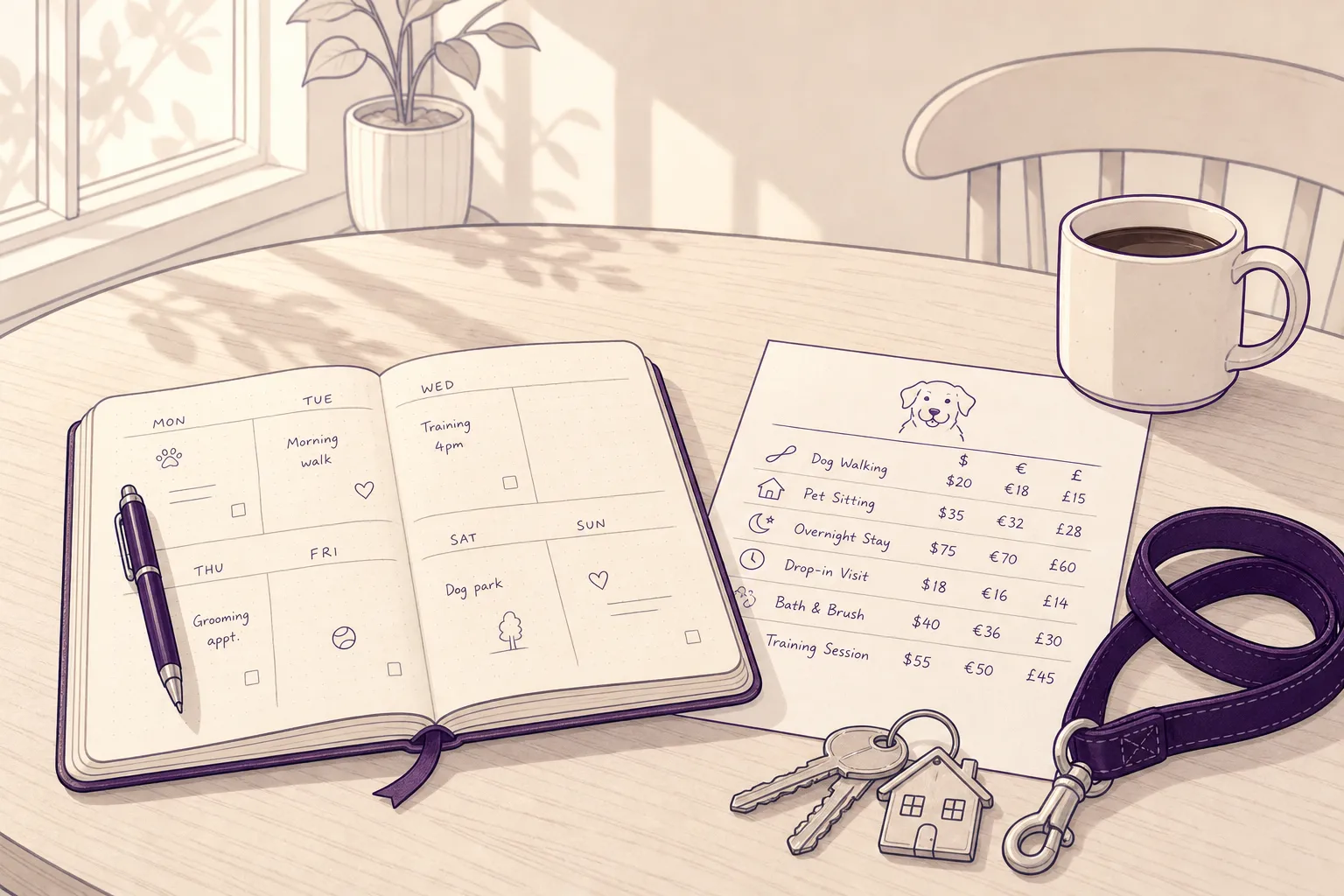
Booking pet care in 2026 can swing more than most people expect. A 30-minute dog walk might be about $22 in Phoenix but $32 in Manhattan. Two cat visits in Birmingham can land around £28, while central London often runs £34 to £36. Overnights in Dublin frequently start near €80, yet hover around €60 in Cork. Use the ranges below to set a budget, then fine-tune based on your pets, timing, and the sitter you want.
Average pet sitter rates by service in 2026
Each city has its own “going rate,” but these ranges will get you close. Big-city cores usually sit near the top, outer suburbs sit around the middle, and small towns land toward the lower end.
30-minute dog walk
- United States: $18 to $30
- United Kingdom: £11 to £18
- Ireland: €12 to €20
- Canada: C$18 to C$28
- Australia: A$22 to A$35
- New Zealand: NZ$20 to NZ$32
60-minute walks often run about 1.5x the 30-minute rate. A second dog typically adds 25 to 50 percent. Example: a $20 base becomes $28 to $30 for two dogs. Most walkers include water refresh and a quick update with a photo.
Drop-in pet visit (feed, litter, quick care)
- United States: $18 to $30 per visit
- United Kingdom: £10 to £17
- Ireland: €12 to €20
- Canada: C$18 to C$28
- Australia: A$22 to A$35
- New Zealand: NZ$20 to NZ$32
Cat visits usually price at the lower end when tasks are simple. Timed medication, injections, subcutaneous fluids, or detailed behavioral notes move the quote up. Many sitters price a small add-on for key pickup, parking, or a longer stay.
Overnight pet sitting in your home
- United States: $60 to $120 per night
- United Kingdom: £45 to £90
- Ireland: €55 to €100
- Canada: C$70 to C$130
- Australia: A$80 to A$150
- New Zealand: NZ$80 to NZ$140
Clarify whether the quote is for a 12-hour overnight with daytime breaks or a 24-hour house sit. Puppies, seniors, multiple pets, or weekday daytime coverage increase the rate. Some sitters offer a base for the overnight plus a day add-on for midday visits.
Cat sitting
- United States: $18 to $28 per visit, $45 to $75 per day for multi-visit packages
- United Kingdom: £10 to £16 per visit
- Ireland: €12 to €18 per visit
- Canada: C$18 to C$26 per visit
- Australia: A$22 to A$32 per visit
- New Zealand: NZ$20 to NZ$30 per visit
Prices rise for special diets, pills, injections, anxious cats that need a longer stay, or if you ask for litter disposal outside the building. If your cat is shy, ask for a slightly longer first visit to confirm they are eating and using the tray.
House sitting without pets
- United States: $45 to $90 per night
- United Kingdom: £35 to £70
- Ireland: €40 to €80
- Canada: C$55 to C$110
- Australia: A$60 to A$120
- New Zealand: NZ$60 to NZ$110
Watering, mail, and bins are often included. Pools, large gardens, frequent deliveries, or appliance maintenance can add a fee. If you have an alarm system or gate, share the instructions early so the sitter can confirm they are comfortable with it.
City size adjustments
- Major metros like New York, London, Dublin, Toronto, Sydney, and Auckland often land 15 to 35 percent above national mids. A $24 walk in a midsize US city can be $28 to $32 in a downtown core.
- Inner suburbs usually hover near the middle of the ranges and book out during commute hours.
- Small towns and rural areas can be 10 to 25 percent lower, with more variance when there are only a handful of sitters.
What changes the price
Rates reflect time, risk, skill, and demand. These are the levers that move a quote up or down.
- Timing and season: Holidays, school breaks, and long weekends carry a premium. Expect 10 to 25 percent higher for peak weeks and a small add-on for very early or late visits.
- Visit length and frequency: Recurring schedules usually price better than one-off bookings. Walks of 45 to 60 minutes cost more per visit but less per minute.
- Pet needs: Puppies, seniors, reactive dogs, or pets on meds take more time and focus. Many sitters charge a clear add-on for injections or multiple medications.
- Number and type of animals: Extra dogs or cats increase the base. Horses, parrots, reptiles, or exotics require niche skills and may be quoted case by case.
- House tasks: Plant care, pool checks, and bin schedules add minutes. Spell out what you want included so there are no surprises.
- Experience and reviews: Sitters with years of work, references, badges, and insurance often charge more and book faster. Many clients consider the premium worth it for reliability.
- Travel and parking: Longer drives, tolls, ferries, or paid parking raise the price. A nearby sitter can keep costs steadier.
- Cancellation and guarantees: Flexible policies can be baked into the rate. Last-minute requests or changes can add 10 to 20 percent.
- Taxes and receipts: In some regions sitters may include VAT or GST if registered. Ask if prices are tax-inclusive and whether invoices are available.
How to compare profiles and feel good about the rate
Start local so replies come quickly. If you type pet sitter near me or dog walker near me, make sure you are seeing current, complete profiles and not old ads with stale prices.
On SitterListed, you can search by service and location, browse detailed sitter profiles that show rates, animals accepted, reviews, badges, and response speed, then contact sitters through direct messaging to discuss dates and your pet’s needs. You can filter across Ireland, the United Kingdom, the United States, Canada, Australia, and New Zealand, which makes it simple to compare the going rate in your city and hire pet sitter directly without a middle layer.
What to look for in a strong profile
- Clear rates and services: A posted price for walks, drop-ins, and overnights, plus what each service includes. Look for add-on pricing that matches your needs.
- Animals accepted: Confirm your pets are listed, especially for cats, small animals, birds, or horses.
- Reviews and badges: Specific, recent reviews beat generic praise. Badges can flag training or background checks where offered.
- Response speed and calendar: Fast replies matter when you are booking around travel dates. An updated calendar saves back-and-forth.
- Photos and notes: Clear photos and short notes on safety, keys, and communication style help you picture the day-to-day care.
How to message for a precise quote
Send a short brief that covers dates, address or area, pet names and breeds, meds, feeding, walk length, crating rules, alarm or gate codes, and anything that could surprise a sitter. Ask what is included in the base rate, what adds cost, and how cancellations work. A paid trial walk or visit is a fair way to confirm fit before a long booking.
If you like tools that do the first pass of searching for you, the way ApplyTOP does for job hunting, use saved searches and shortlists so you can quickly compare profiles when new availability opens up.
Saving without underpaying
You can trim the bill while staying fair to the person doing the work. Start with levers that do not cut into the sitter’s time.
- Book early for peak weeks: Holiday rates climb fast. Early outreach often locks in a better price and your preferred sitter.
- Bundle visits: Two shorter cat visits per day can be cheaper as a package. If you need a month of mid-day walks, ask for a weekly rate.
- Flexible windows: If your dog’s walk can start any time between 11 and 2, say so. Wider windows are easier to schedule at the base rate.
- Provide supplies: Leave food, litter, bags, meds, and a spare key or code. Avoiding extra trips keeps your quote tight.
- Longer stays: Overnights of 4 nights or more often qualify for a small nightly discount compared to single nights.
- Repeat bookings: Many sitters keep loyal clients at last year’s rate or offer small thank-you breaks. Ask politely, not pressingly.
- Clarify house tasks: Keep chores simple to avoid add-ons. If you need garden or pool care, confirm the time it takes and price it in.
What not to do. Do not haggle a pro below your city’s going rate. Instead, adjust scope. If your budget is tight, shorten the visit, reduce non-essentials, or look slightly outside the center for a nearby sitter. If your goal is to find cat sitter options that cost less, consider one 45-minute visit that covers play and meds rather than two short visits.
Putting it all together
First, decide the service and frequency you need. Second, price it against the ranges above and scan a few local profiles to see where your area lands. Third, send a tight brief to two or three sitters and book a paid trial. You will quickly see the value each sitter brings and what a fair number looks like for your pets and your city.
Key takeaways
- Dog walks and drop-ins sit in the high teens to low thirties in most markets, with big-city cores 15 to 35 percent higher.
- Overnights vary the most. Pet needs and daytime coverage move the number more than location does.
- Rates change with timing, skills, and scope. Be specific in your brief to get a precise quote.
- Compare profiles on posted rates, reviews, badges, and response speed. Book a paid trial before long trips.
- Save by booking early, bundling, and simplifying tasks, not by underpaying for the same workload.
FAQ
How much should I pay for an overnight pet sitter in 2026?
In most cities, expect about $60 to $120 in the US, £45 to £90 in the UK, and similar equivalents in IE, CA, AU, and NZ. Complex care or peak weeks sit higher.
Are pet sitting rates per pet or per visit?
Base rates are per visit or per night, with an added fee for extra pets. The surcharge is often 25 to 50 percent for a second dog, less for cats.
Do I tip a pet sitter?
Tipping is optional. Many owners add 10 to 20 percent for excellent care, holiday work, or last-minute saves. Repeat bookings are another way to say thanks.
How far in advance should I book for holidays?
Six to eight weeks ahead is smart for major holidays and school breaks. Top sitters in big cities can fill even earlier.
What should be included in a house sitting rate?
Basic tasks often include presence overnight, mail, bins, and light plant watering. Pools, large gardens, and frequent chores usually add cost.